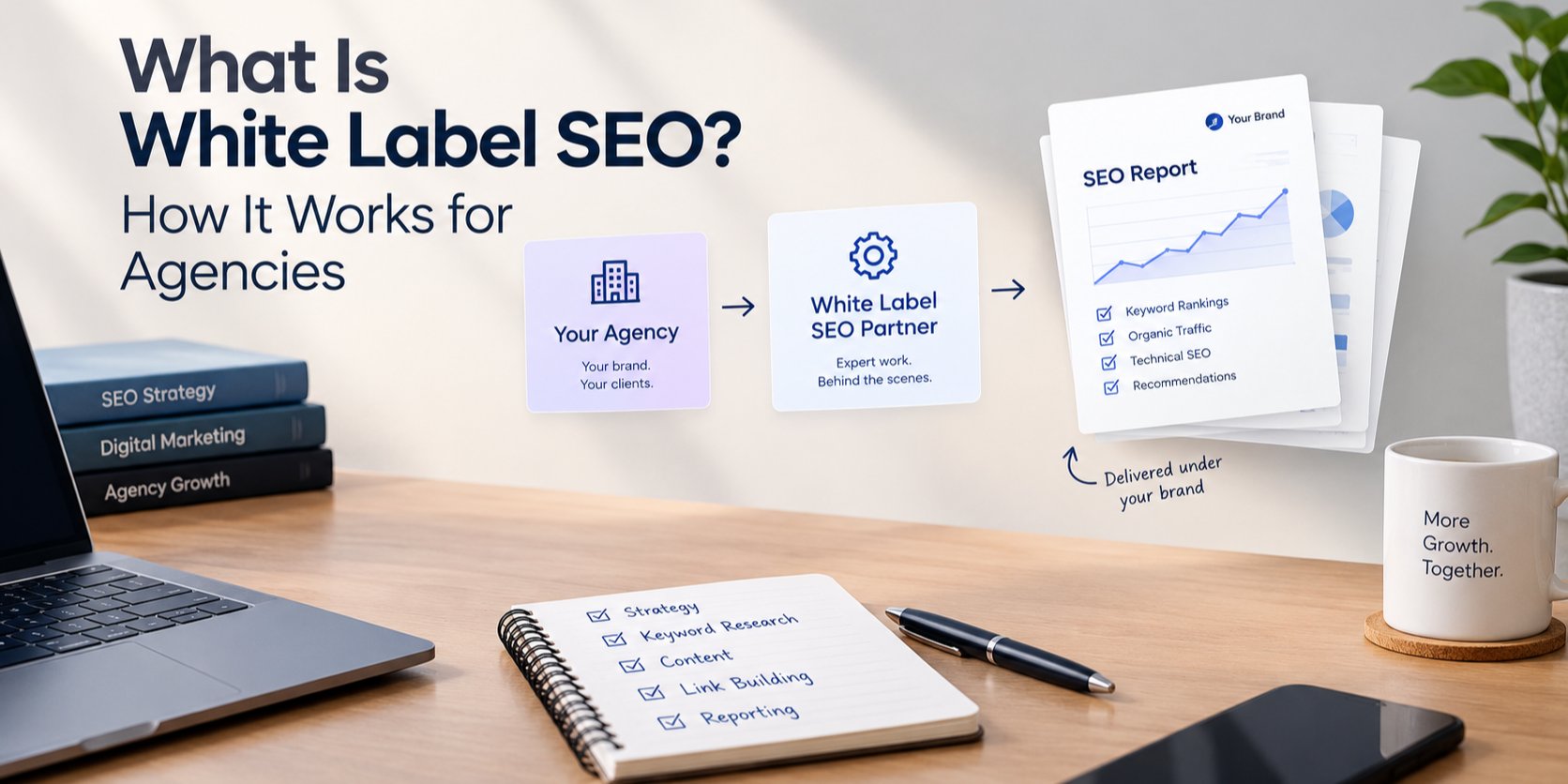
White label on-page SEO is the page-level part of SEO, done by a partner and delivered under your agency's brand: titles, meta descriptions, headings, content, internal links, images and structured data on the client pages that matter. It covers what is on each page, not links from other websites or site-wide technical fixes. Your client sees your recommendations and your report; the partner stays in the background.
Agencies ask for it because on-page work is where many SEO plans stall. The audit says "rewrite 40 titles and fix the headings", and nobody has the hours to do it carefully. This guide lists what a white label on-page SEO service should include, what it should not, and what to ask for before you put your name on the work.
If you are new to the model itself, start with what white label SEO is and how it works for agencies.
What is included in white label on-page SEO
Every item below is something you can see on the page, check in the page source or read in a before-and-after sheet. If a partner cannot show you the change, it is not a deliverable.
1. Page and keyword mapping
Each important page gets one main search it is meant to answer, plus a few close variants. This stops two pages on the same site competing for the same query, which is one of the most common reasons a client page sits on page three. The map is the foundation for everything else, so ask to see it first.
2. Title tags
The title is the strongest on-page signal you control and the first thing a searcher reads. A good title names the page's main topic early, stays short enough not to be cut off, and is unique on the site. Google can rewrite titles it judges unhelpful; its guide to title links explains which sources it uses, and a partner should write titles that give Google no reason to replace them.
3. Meta descriptions
Descriptions do not move rankings directly, but they shape the snippet and therefore the click. Each one should summarise the page in plain language and match what the page actually delivers. Google explains how it builds snippets, including when it uses the meta description and when it pulls text from the page instead.
4. Headings and page structure
One H1 that says what the page is. H2s that follow the questions searchers actually ask, in a sensible order. The direct answer near the top, not after four paragraphs of introduction. This matters more now that AI answers quote the clearest passage on a page.
5. Content improvements
On-page SEO is not only tags. It includes rewriting thin sections, adding missing answers, removing repeated text and making sure the page covers what the searcher needs to decide. New pages and blog posts are usually a separate content line item; improving existing copy belongs here.
6. Internal links
Links from the client's pages that already get traffic to the pages that need it, with anchor text that describes the destination. Google's SEO starter guide covers why descriptive link text helps both people and search engines. This is often the fastest on-page win because it needs no new content.
7. Images
Descriptive alt text, sensible file names and images sized for the page. This helps accessibility as much as search, so it is easy to justify to a client.
8. Structured data
Markup such as Organization, Product, Article or FAQ that matches what is visible on the page. Google's introduction to structured data is clear that markup must describe the page's real content; markup for reviews or questions that are not on the page is a risk, not a shortcut.
What on-page SEO does not include
Scope arguments with clients usually start here, so agree the boundaries in writing.
- Off-page work. Link building, digital PR and directory listings happen on other websites.
- Site-wide technical SEO. Crawl errors, indexing, redirects, sitemaps, site speed and Core Web Vitals. Some partners bundle it, others quote it separately. The two overlap at canonical tags and page-level indexing, so decide who owns those.
- Local SEO. Google Business Profile and citations sit off the website.
- New content production. Writing new pages or posts is usually its own line, priced per piece or per month.
How white label on-page SEO is delivered
A clean delivery looks like this, whichever partner you use:
- Brief. You share the client site, the pages that bring in enquiries or sales, and any access you want the partner to use.
- Page sheet. The partner sends a sheet per page: URL, target search, current title, proposed title, current and proposed description, heading changes and notes. It should carry your branding, or none, so you can forward it.
- Your review. You approve, edit or reject each change before anything goes live. The agency stays in charge of what the client sees.
- Implementation. Either the partner makes the changes in the CMS, or your team does from the sheet. Agree which, in writing.
- Record and report. A before-and-after log, so any change can be rolled back, and a monthly report that explains what changed and why in plain language.
At Codeja Infotech, on-page optimisation is part of our white label SEO for agencies, delivered alongside technical audits and fixes, keyword plans and content. Because the same team builds websites and Shopify stores, we can make the changes ourselves when you give us access, and anything that changes a client's site is explained to you first.
Questions to ask a partner before you resell on-page SEO
- Can I see a sample page sheet? If the answer is a PDF of generic advice, keep looking.
- Who makes the changes? A partner that only reports leaves the work with your team.
- How do you write titles and copy? Mass-produced, keyword-stuffed text puts the client at risk. Google's spam policies cover keyword stuffing and scaled content abuse; a partner should be able to explain how its work stays clear of both.
- What happens when a change hurts a page? You want a rollback log and an honest explanation, not silence.
- Do you promise rankings? The right answer is no. Nobody controls Google's results.
How long until on-page changes show
Google has to recrawl a page before any change can count, and that can take days or weeks depending on the site. For the most important pages you can ask Google to recrawl through Search Console. After that, results vary by competition and by the rest of the site, which is why a partner should report what changed and what is next rather than promise a date.
How to price it to your clients
Most partners quote per client site after a short review, either as a one-off page project or as part of a monthly plan. You set your own price to the client; the difference is your margin. If you want to test a partner before committing a client, a one-off audit of a single site is the lowest-risk way to see the quality of the recommendations.